Blog
Found at six: bread near me, not the morning tray
The search at 18:00 is ‘bread still open’. Distance is crowded. Hours, the category, and a listing that still tells the truth decide who gets the walk.

Reviewed 15 May 202610 min read
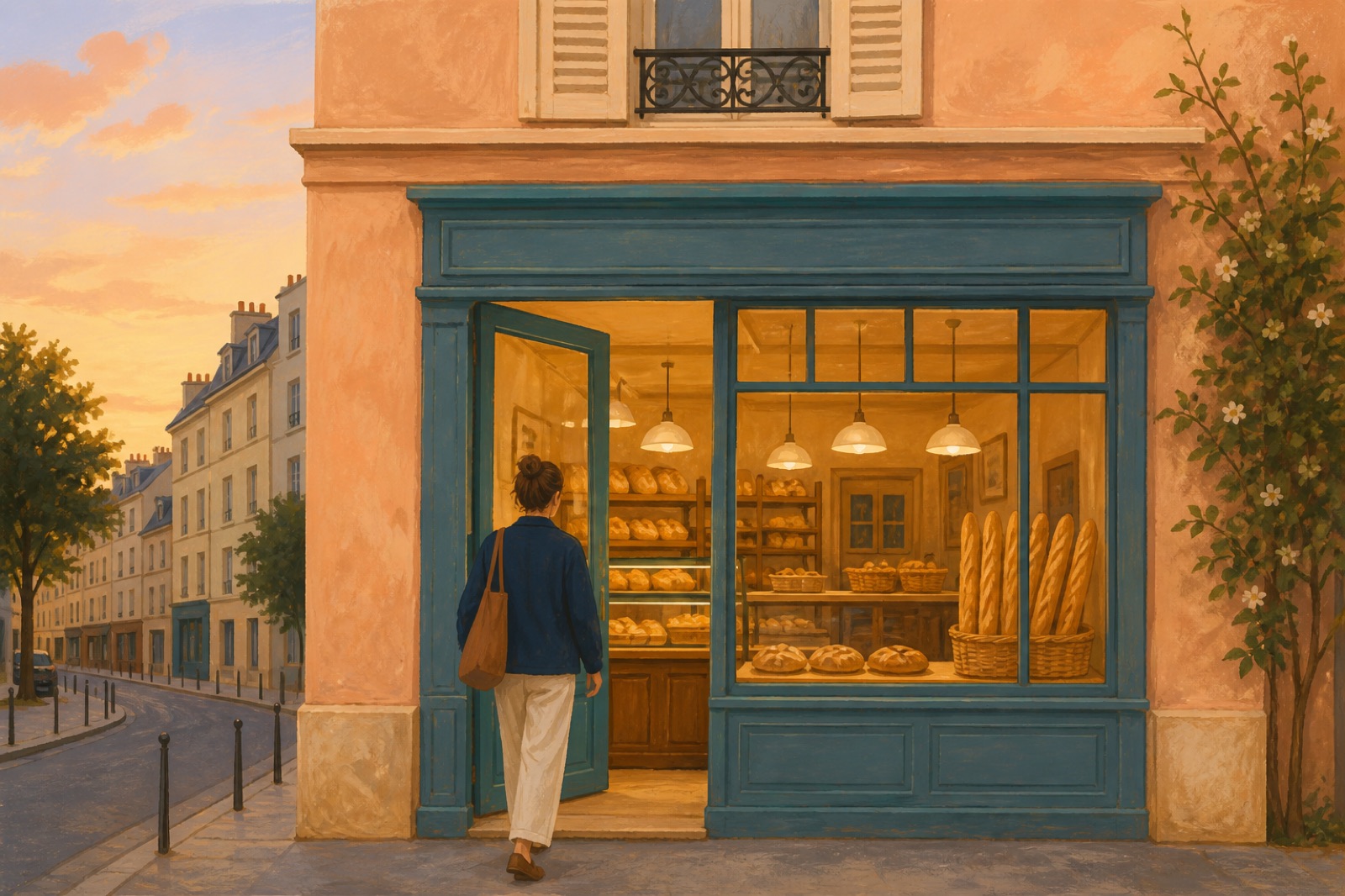
At seven the tray is full and nobody is typing. At six they are. “Bakery near me.” “Bread still open.” Sometimes just “bakery” with the phone already in the street. Google draws a short list. Two shops are a four-minute walk. One of them still says open. One of them has this morning’s hours. That is the search this article is about — not the photograph of the first bake.
INSEE’s work on shop access is useful here, and we will not stretch it. Three consumers in four live within two kilometres of a bakery. On a French street that means distance is crowded. You are rarely the only oven in the circle. The neighbour is also close. What Google still has to decide is who looks like the answer at that hour.
Screenshot pending: local-seo
Run pnpm screens with the app's local stack up to capture it. A bakery Google listing edited in Artifluence.
What “bread near me” is actually matching
Local results are relevance, distance and prominence — Google’s words, on the local ranking page, not a ranking-factor blog’s. Relevance is whether the profile is a bakery when someone typed bakery, or bread, or pastry. Distance is how far you are from the person holding the phone. Prominence is how well-known the shop appears: reviews, mentions, a listing that looks looked-after.
You do not negotiate the two kilometres. INSEE already told you most people have a bakery in that radius. You negotiate whether the listing matches the query, and whether it looks alive at 18:00.
Primary category: bakery. Pastry as secondary if you actually do cakes. Grocery store, sandwich shop, or “food” as the main line is how you lose the match before the walk starts. Google’s category help is short because the job is short: pick the trade, not a catalogue of everything you also sell.
The name is the name on the window. Not “Dupont Bakery — bread, viennoiserie, sandwiches, coffee, gluten-free, Lyon 3”. Representation guidelines are written against that title. A stranger searching the shopfront should land on the shopfront.
Six o’clock is a hours problem before it is a ranking problem
Why the bakery two streets over ranks first is the general piece: relevance, distance, prominence, the three shops in the pack. This one is narrower. At six the ranking you “won” at noon is wasted if Maps still says open and the shutter is down — or says closed while you are bagging the last ten baguettes.
Google lets you edit today’s hours. Special hours exist for the day you close when it is sold. The edit-profile page describes the fields. They still have to be used that evening. A closed door and an open listing is the neighbour’s sale. An open door and a listing that already says closed is the same walk, the other way.
The morning article on this site — the tray at seven, the post in the afternoon — is the publishing job. Do not confuse the two. Photographing the bake does not fix a lie on the hours. Publishing at the hungry hour does not fix a category that says grocery.
If you close Monday, say Monday. If Sunday is 8 to 13 only, say that. Bank holidays belong in special hours before the day, not in a review that says “came, closed, never again”. That calendar is hours, holidays, seasons.
Prominence on a street that already has bread
INSEE’s 2025 retail accounts say bakery–pâtisserie sales rose at national level. That is a country figure. It does not tell you who wins your street, and we will not invent a local percentage to make the paragraph look finished. More people buying bread in France is not a ranking factor Google named.
What Google did name is prominence: reviews, the rest of the web saying the same name, a complete profile. On a street with three bakeries inside two kilometres, the quiet listing loses to the one with recent sentences and photographs of this shop. Not because Google published a quota. Because the pack has to choose, and a neglected card looks like a neglected shop.
We do not have a figure for how often the six o’clock search goes to the neighbour with true hours. The free report can put your listing next to the bakeries Google already shows. It publishes nothing.
Youssef Benali’s sentence is on the bakers page, because he said it. It is not copied here to decorate a ranking article.
What we will not invent
We will not tell you that claiming the listing “guarantees first place at 18:00”. Google says you cannot buy local rank. Completing the profile is the minimum they ask in order to consider you. Name as on the shopfront, a phone that rings into the shop, hours that are true tonight, bakery as the category, photographs taken here.
The listing is the page a stranger sees before they walk. Keep it as honest as the window. The rest of the week — the post, the Saturday cake, the review — sits on other articles. This one is the search that happens when the tray is already thin.
Sources
- Tips to improve your local ranking on Google (accessed 7 September 2026)
- Guidelines for representing your business on Google (accessed 7 September 2026)
- Manage your business category (accessed 7 September 2026)
- Shops are less accessible in peri-urban areas (INSEE) (accessed 7 September 2026)
- The retail accounts in 2025 (INSEE Première 2111) (accessed 7 September 2026)