Blog
A restaurant listing for tonight, for a booking, and for the menu
Walk-in hours, a reservation link that still works, a menu that is not a 2019 PDF. Three jobs one Google card has to do — without mixing them.

Reviewed 5 June 202610 min read
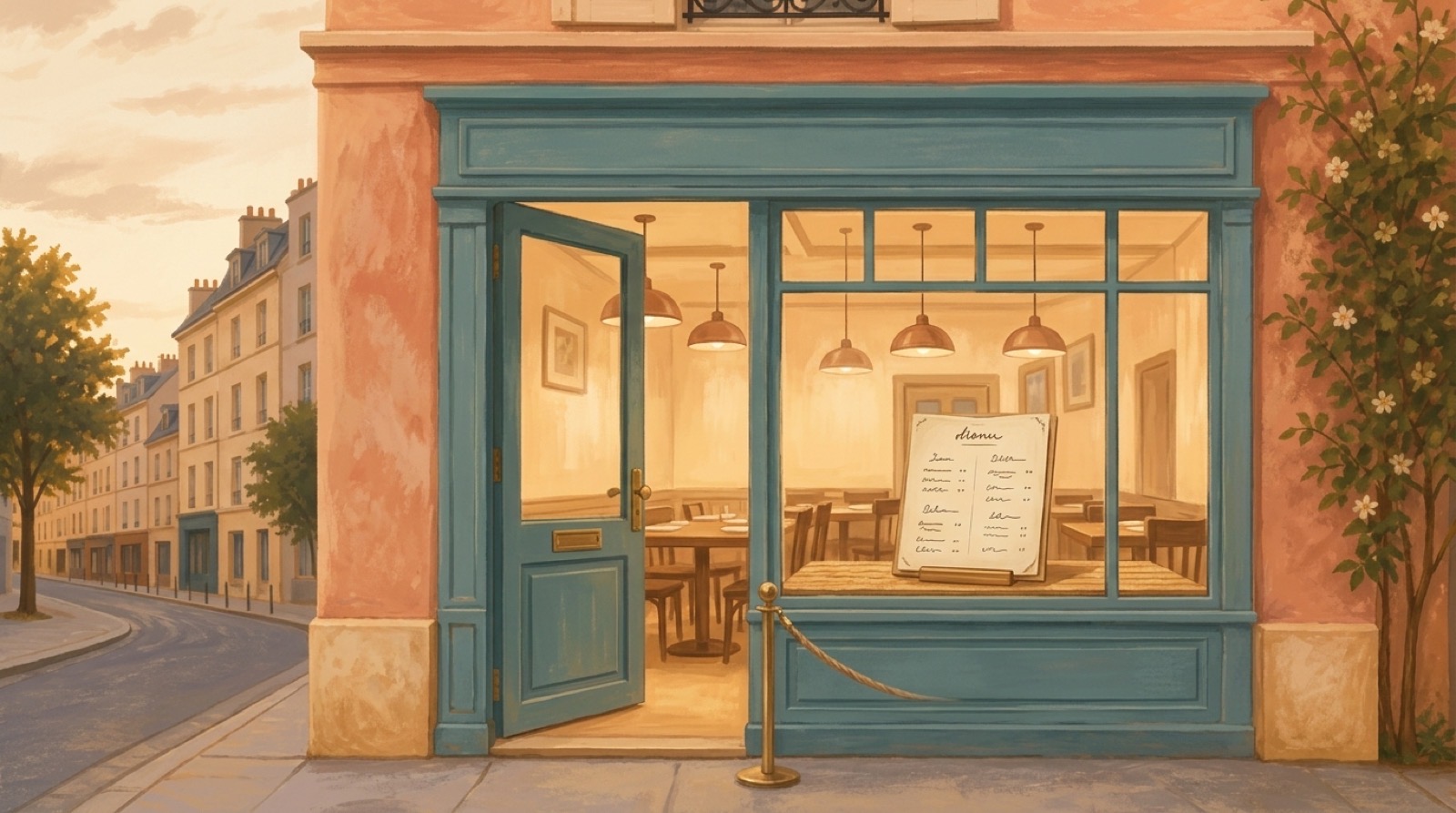
The first restaurant article on this site is short on purpose: hours, menu, today’s dish, photographs from service. That is still the job. This one goes further into the three people who open the same card and want three different facts. One is walking in tonight. One is booking Thursday. One is reading whether they can eat here at all — allergens, prices, a terrace, a last sitting.
If those three jobs share one dead PDF and a kitchen hour that is a lie, the listing is not “unoptimised”. It is unfinished. Completing the card is the minimum Google asks before it will treat you as the restaurant you are.
Screenshot pending: local-seo
Run pnpm screens with the app's local stack up to capture it. Business information for a restaurant in Artifluence.
Tonight is not a reservation, and a reservation is not a PDF
Tonight is the walk-in. Evening hours, which sitting closes, “open now”, a photograph of the room at an hour you would dine, a phone that someone picks up between two tables. If you are full, say you are full — a post, today’s hours, the booking tool — rather than a listing that still invites a walk that ends at the door.
A reservation is a date that is not tonight. The action button, or a link that still opens. A dead TheFork or OpenTable URL comes off the same week you notice it. A phone that goes to a full voicemail on Saturday at seven is not a reservation system. If you only take tables by WhatsApp, say so in the description and stop advertising a button that dies.
The menu is what they will eat, at a price you will still honour. If Google offers a menu field, use it and keep it. If the only honest version is a page on your site, link that page. A 2019 PDF with last year’s prices is worse than no file. People screenshot it. Then they write the review.
The older restaurant listing piece already said a stale PDF is worse than nothing. Here the rule is operational: the file, the Google menu, and the board in the window have to agree this week. If the lunch formule changed on Monday, Monday is when the link changes. Not “when we reprint”.
Name, category, the hours of the sitting
The name on the listing is the name on the awning. Not “Le Jardin — bistronomy, brunch, cocktails, private room, since 2012”. Representation guidelines are written against catalogues in the title. Keywords in the name get edited back, or the profile gets suspended. See what happens when a listing is built to look clever rather than true.
Primary category: the job. Restaurant, pizza restaurant, seafood restaurant, café — one. Secondaries only if you actually are them. A wine bar that does not serve dinner should not wear “restaurant” as a costume. Google matches searches to categories more than to a paragraph of words in the description.
Hours on the listing are the hours a stranger can eat, not the hours the lights are on. Kitchen close belongs where people see it. Monday closed is a fact. Sunday lunch only is a fact. 15 August is a fact you set in June. Google’s edit-profile page gives you regular hours, special hours, and today’s hours. Use them. The longer calendar is hours, holidays, seasons. The twenty-minute search is found twenty minutes before.
A restaurant is a shopfront. Put the address. The name, address and phone have to match the directories, the window, and any page you have. If PagesJaunes still has the old mobile and Google has the landline, Google will eventually build a second card from the web. Then you spend a month merging two rooms that are one.
The phone is a number that rings in the room, or in the pocket of the person who can say whether a table at 21:00 is still possible. Not a call centre for a group you left. If you do not answer during service, the voicemail should say when you call back. A listing that offers “Call” and then dies is a review waiting to happen.
What the profile has to show before they stand up
Photographs from this service — the plate, the room, the window. Not stock pasta. The dedicated pieces are photos on the listing and photographs from this service.
Attributes: only what is true this year. Terrace if there is one you own. Wheelchair access if the door allows it. Vegetarian if it is on the menu. Do not tick “romantic” because a consultant liked the word. Do not tick vegan if the one dish left last March.
Reviews, replied to. A link if you have a page for the menu or the booking; the listing works without a site. Whether you still need a website is the honest general article. For a lot of tonight trade, Maps is the page. The menu page earns its keep when the card cannot hold the allergens and the tasting menu — that is the menu versus the listing.
Products and prices, if you will keep them true. A formule at last year’s number is worse than no price.
What Artifluence keeps straight
The listing editor is built for this: category, hours, the description, the photographs, the link that still opens. It does not invent a second brand for a group you are not on. It does not write “best table in town” into the title.
We do not have a restaurant testimonial on this site. The business page says so. We do not paste a invented covers story here to make the card look like a case study.
The report is how you see what Maps already knows — name, hours, the rooms next door — before you change anything. It publishes nothing.
The three jobs share one card. Tonight, the booking, the menu. If one of them is a lie, the other two do not save you.
Sources
- Guidelines for representing your business on Google (accessed 7 September 2026)
- Manage your business category (accessed 7 September 2026)
- Edit your Business Profile (accessed 7 September 2026)