Blog
Electrician photos: the board and the van
A labelled cupboard, the van on a street you work, a face if you want the call. What belongs on the listing — and the stock living room that does not.

Reviewed 21 July 20269 min read
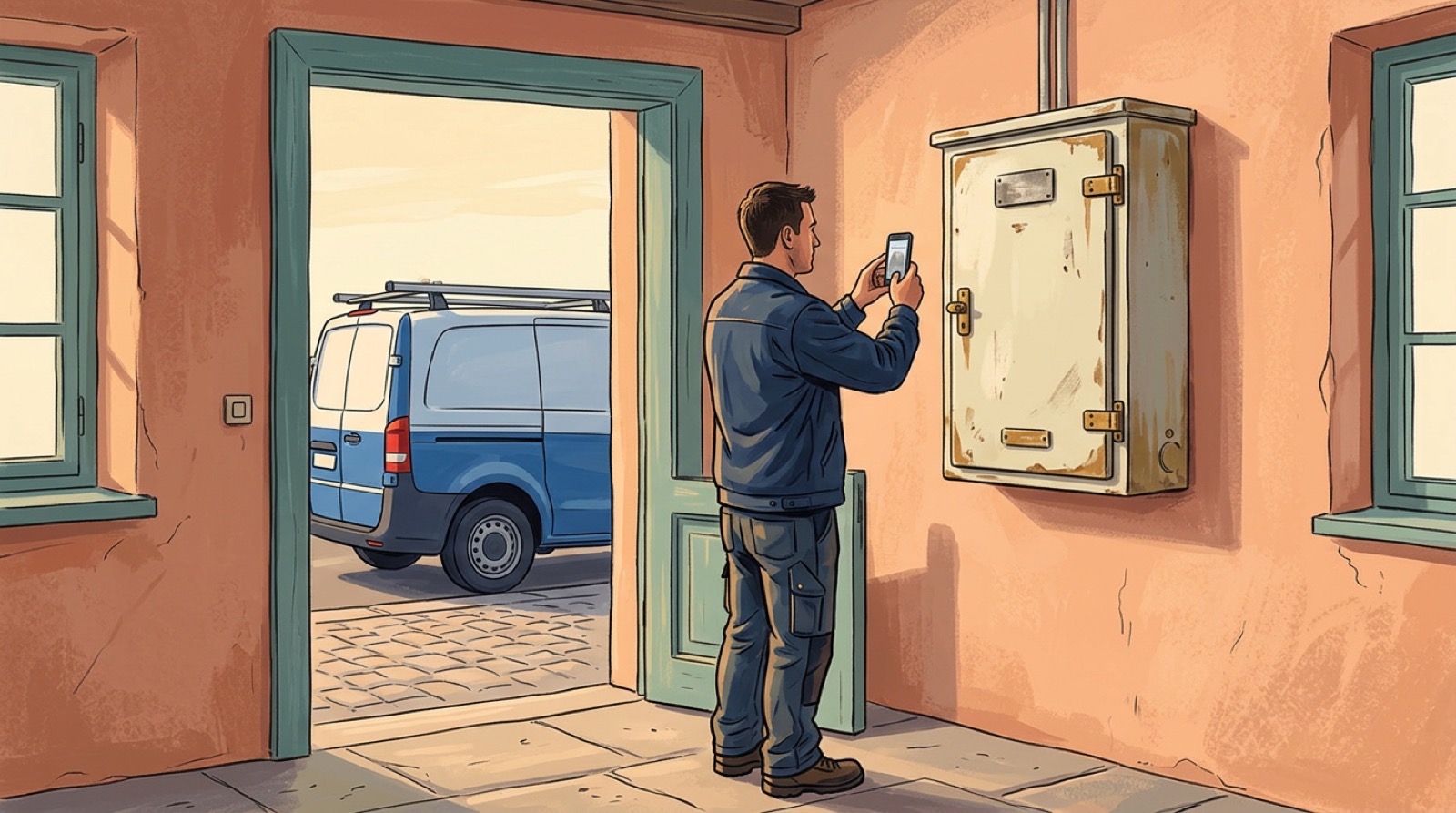
The lighting shop photographs the window of lamps. You have no window. The listing still needs pictures a stranger can trust when the house is dark. Three kinds, in that order: the van, a finished board, the loft or the after only if they said yes.
Screenshot pending: local-seo
Run pnpm screens with the app's local stack up to capture it. Listing photographs for an electrician in Artifluence.
The van first
A logo is not a person they will let into a loft. A clear photograph of the van on a street you actually work, or of you at the door, beats a rendered living room you do not own. Cover photos that are stock chandeliers get the listing looked at as decoration. Google’s photo rules want the business, not a catalogue.
If you work alone, do not upload a “team” of models with testers. The representation guidelines and the photo policy meet on that point.
The board — labelled, closed, yours
A finished cupboard, cover on, labels readable enough to show care, not readable as a customer’s circuit map for the whole street. That is what reassures someone searching with a torch. The open “before” is useful only if they agreed, and only if you are not showing their house number, their children’s drawings, their meters in a way that identifies the flat. When the job is in a block, the landing is usually enough; a letterbox is not.
The listing photos piece is the general rule. Here the rule is: they should believe you have opened a board like theirs and left it safe to close.
Ask before you raise the phone. A sentence is enough: “Can I take the board for the listing?” If they say no, the van is still a photograph. If they say yes for the after and no for the spaghetti, you have one picture, not a pair.
Do not lift photographs from a manufacturer’s brochure. Do not use another electrician’s cupboard from a group chat. Do not crop a Consuel stamp in as if it were a five-star badge.
What you do not put up
A live board with the cover off, presented as drama, if they have not been asked. A neighbour’s meter. A certificate number large enough to read. Underwear on a radiator in the next room. A “before” that is actually a different site, lined up to look like a miracle.
When they ask you to take the pictures down, take them down. The listing is yours. The cupboard is not.
Cover, gallery, the van at 21:00
The cover is one frame a stranger sees before they call: the van, or a closed labelled board, in honest light. The gallery is five or ten more that are still allowed — not every open cupboard since 2022. Facebook can hold the street. The listing should hold proof you finish and you close the door.
You do not need a photographer. The phone you already have, the lens wiped, no portrait blur that invents a neatness the board does not have. Do not grade a white cupboard into a showroom it is not.
When a job is in a house that asked for privacy, the van is enough. When a job is a block, the landing after is enough. A letterbox, a child’s room, a neighbour’s meter, a Consuel number large enough to read: off. Manufacturer cutaways of a board you did not install are a catalogue, not your business.
An open live board without consent is not drama. It is their cupboard on the internet. If you are not sure they said yes, you do not have a photograph. You have a risk.
A logo on a white square is not a cover. A catalogue of lamps you do not sell is not a gallery. The side of the van, if the name is readable, is often the honest cover. When you change the mobile, that photograph does not have to change. The listing number does.
If you only have the van this month, that is a listing. Five stock chandeliers would be a shop you are not. Wait for the next consent. The report will not tell you to upload a catalogue to look complete.
One honest van and two consented boards beat a gallery of twelve open cupboards. If you are not sure which is which, take the open ones down. The listing should look like a business that closes the door.
What we do with them
You drop the files in. Artifluence can write the post. The listing still needs a human to decide which cupboards are allowed on Google. We will not auto-publish an open board because the file was in the folder.
The electricians page has no customer quote. We will not invent one to decorate a photo article. We do not have a count of “how many board photos a ranking electrician has”. When we publish a dated audit distribution, it will sit below.
Sources
- Business Profile photos & videos policy and posts content policy (accessed 7 September 2026)
- Guidelines for representing your business on Google (accessed 7 September 2026)