Blog
Booking the bay: when a page earns its keep next to Maps
The listing already has the call button. A short page is for the slot, the inspection date, a form you will actually read — not a second brochure.

Reviewed 8 August 20269 min read
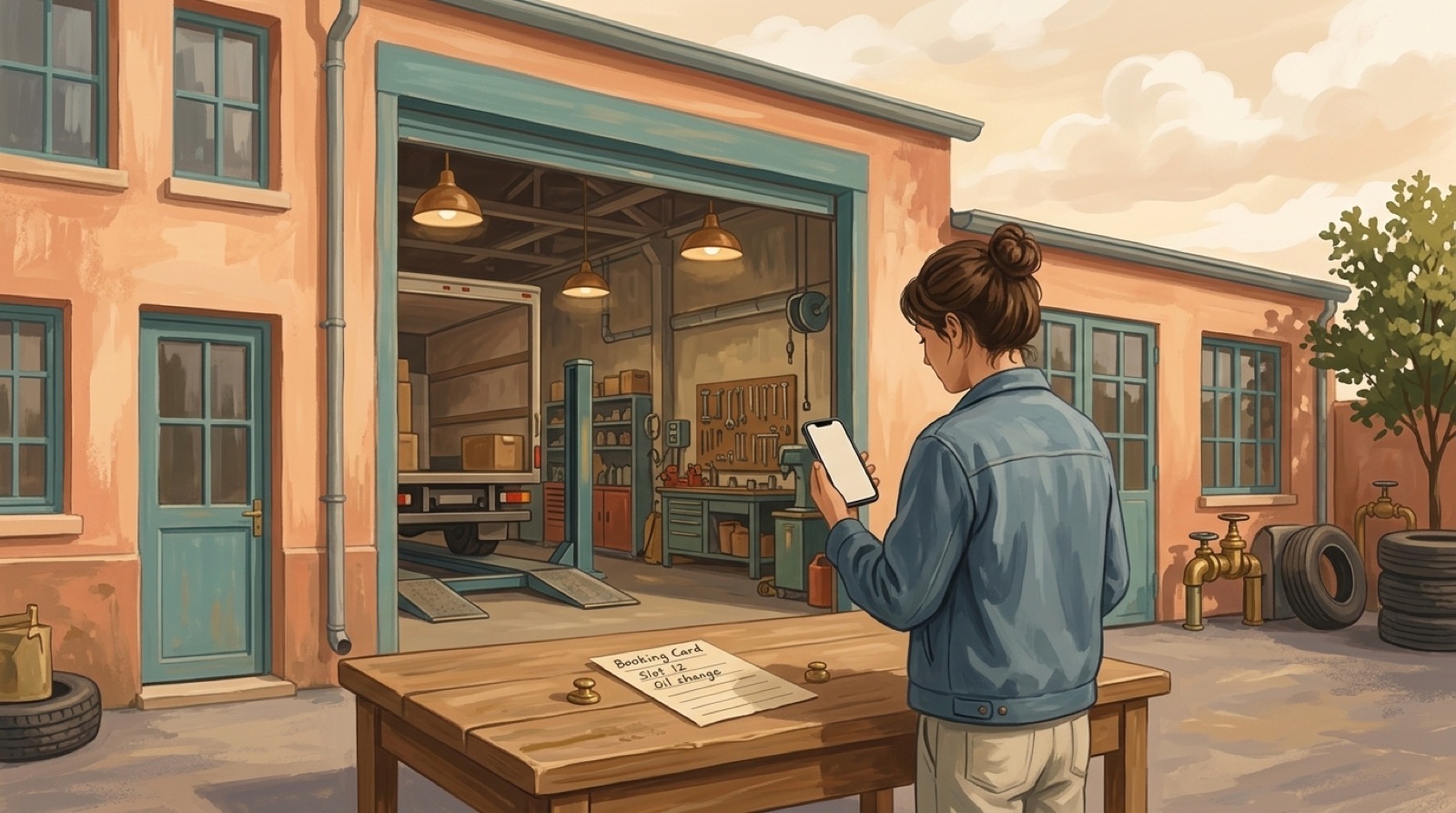
The listing is where people shop for you. A site is where they shop for a slot the card cannot hold: a morning drop-off, an inspection date, a form you will actually open. Mixing the two is how a workshop spends the evening updating a homepage nobody opened, while Maps still says last winter’s Saturday hours.
Screenshot pending: website
Run pnpm screens with the app's local stack up to capture it. A simple garage site generated in Artifluence.
What the listing already does
Name, hours, photographs of the lift and the reception, reviews, a call button. For a lot of “garage + town” and “oil change near me” searches, that is the website. Google says a complete, accurate profile is what they show on Maps. The general argument is whether you still need a site. For a garage it is sharper: if the only job is a phone that answers, finish the card first. The name on the sign is that job. You versus the dealer is the search.
A booking link on the listing that dies is worse than no site. People trust the first button they tap. If that button is a calendar you do not look at, they either call the dealer or they arrive angry. The action button should be Call until the page is real.
When a page still earns its keep
A driver who wants to send a slot in a family message. An inspection due date written down. A first visit who wants the services listed without phoning during the rush. Then a short page: who you are, the work you take, how to leave the car, a form or a number you will actually read. Not a replica of a dealer configurator. Not a blog you will not write.
Artifluence can build that page from what the product already knows. It is not a group site. It is a place the listing can point. Name, phone and address on that page still have to match the listing. NAP is how Google notices you are one business, not two.
The slot on the page and the bay in the workshop have to agree. Two systems that disagree are how you double-book a lift and then write the wait review yourself.
A form earns its keep if someone reads it the same morning. Name, phone, the car, the work, a preferred day. Not seventeen fields. Not a “we will get back to you within 72 hours” if you will not. If the honest answer is “call, we are under a car”, put the number and drop the form. The listing’s Call button is then the site.
Inspection dates and seasonal work can live on the page as a sentence, not as a blog. “We prepare for the contrôle; book the week before it is due.” Keep it true when the rule changes. A 2022 paragraph about the inspection interval is the garage version of a 2019 menu PDF.
Hours on the page, hours on the listing
If the page exists, it will be found on a Saturday when Maps is also open. The hours on that page have to match the listing the same week. A “closed Saturday” footer and a Google card that still says 9–12 is how you earn the driver who finds a shutter. August and the May bridge belong in both places, or only on the listing if you will not touch the site in time.
The phone on the page is the phone on the card. Not the old mobile in the footer of a template. Hours, holidays, seasons is the listing job. The site, if you have one, copies it. It does not invent a second week.
What we will not sell you
A parts catalogue you will not maintain. A “book any make in three clicks” widget that lies about Thursday. A virtual showroom. A TikTok embed. A second brand for a network you are not on. The garages page is honest about the week: reviews answered in the day, the listing complete. The site, if it exists, should take less time than a brake job.
We do not have a garage testimonial on this site. We will not invent a workshop that “filled from the new website”. The morning search still starts on Maps.
If you have no photographs of the lift, and the hours are still wrong, building a site on top of that is painting a window whose door does not open. Keep the listing first. The page is a pointer. The bay is the product. If the pointer and the bay disagree on Saturday morning, take the page down until they agree.
The report reads what Maps already knows. It does not publish a homepage.
Sources
- Tips to improve your local ranking on Google (accessed 7 September 2026)
- Edit your Business Profile (accessed 7 September 2026)